This article originally appeared on wtvr.com
Less than 50% of people who experience cardiac arrest receive CPR from a bystander, according to the American Heart Association — and experts say fear is one of the biggest reasons people don’t step in.
This week is CPR and AED Awareness Week, and the message from medical professionals is clear: lifesaving skills aren’t just for first responders.
“Anybody can do this, and it’s one of those things that can really save a life. So that’s why it’s so important,” said Harold Mayfield, training coordinator for the Richmond Ambulance Authority.
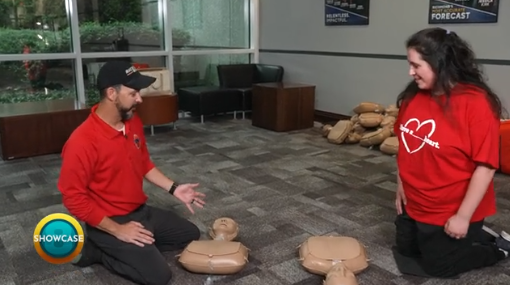
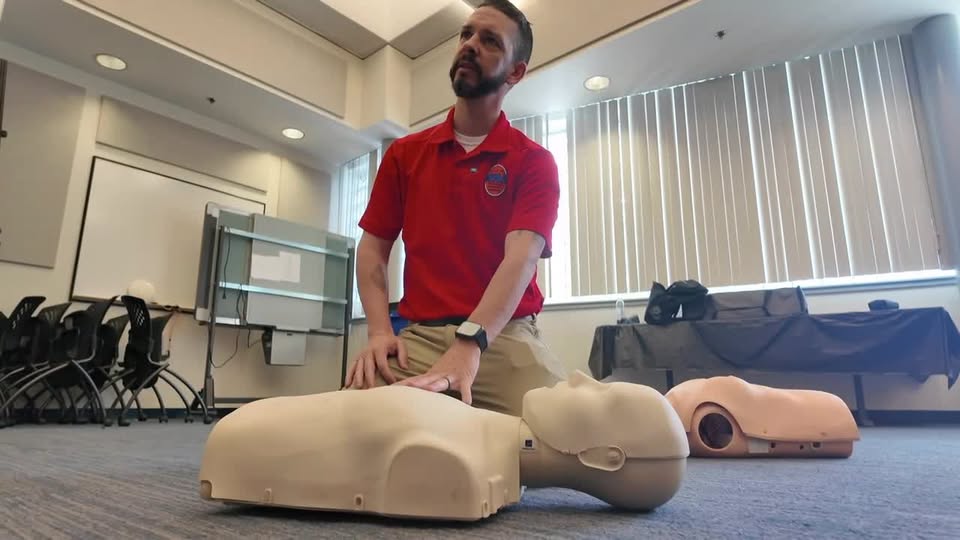
Hands-only CPR focuses on chest compressions to keep oxygen-rich blood flowing until help arrives. Mayfield walked me through the technique during a training session at the Richmond Ambulance Authority.
“Find your sternum, which is that flat bone that’s right here in your chest, and then you find that nipple line right here, and then you put the heel of your hand right there, lock your fingers in, and then you lean over and go hard and fast, 100 to 120 beats per minute,” Mayfield said. “People are always worried about injuring them more, and I hate to be cynical, but I always say, you know, in this situation, they’re not breathing, their heart’s not beating, they’re technically dead, right. So, how can I hurt them anymore?”
The American Heart Association is working to reduce that fear through CPR kiosks across Central Virginia. The kiosks feature a touch screen, mannequin, and real-time feedback system that can train users as young as 9 years old to properly perform CPR in under five minutes. I gave one a try to test my CPR skills.

“We’re hoping at the Heart Association that people will go from being bystanders to being life savers by taking just a few minutes this week to learn how to do hands-only CPR,” said Michelle Nostheide, executive director of the American Heart Association.
The kiosk scores compressions in real time, helping users learn the proper depth and rhythm.